Limestone County Recycling Guide
Curbside collection in Limestone County won't take furniture, appliances, yard waste, or construction debris — here's what that means and how recycling actually works locally.
Athens dumpster guide
Limestone County's namesake bedrock means rockier or uneven ground in some yards and driveways — here's what that means for placing a dumpster safely.
Limestone County isn’t named for nothing. The county sits in the Highland Rim physiographic section of North Alabama, and its namesake creek runs over a bed of hard limestone — a geological fact that shows up in ordinary, practical ways on properties across the county. If you’ve ever hit rock a few inches down while planting a tree, noticed a section of yard that never drains quite right, or dealt with a driveway that’s slightly uneven no matter how many times it’s been patched, shallow bedrock and rocky soil are often part of the reason. It’s worth understanding before a loaded dumpster shows up on your property.
To be clear about what we’re saying and what we’re not: we’re not talking about sinkholes or any documented geological hazard specific to Limestone County. What we mean is more ordinary — the county’s limestone valleys and uplands mean that in a lot of spots, especially older or unimproved areas of a property, bedrock or dense rocky soil sits closer to the surface than it does in areas with deeper topsoil. That affects excavation depth for things like fence posts or drainage work, and it affects how level and stable the ground actually is once you get off a paved driveway.
Most residential driveways are fine — poured concrete or asphalt sits on a prepared, compacted base regardless of what’s underneath it. Where this matters more is unpaved parking areas, gravel pads, side yards, and any spot where a driveway has settled or cracked unevenly over the years, sometimes because of exactly this kind of variable ground underneath.
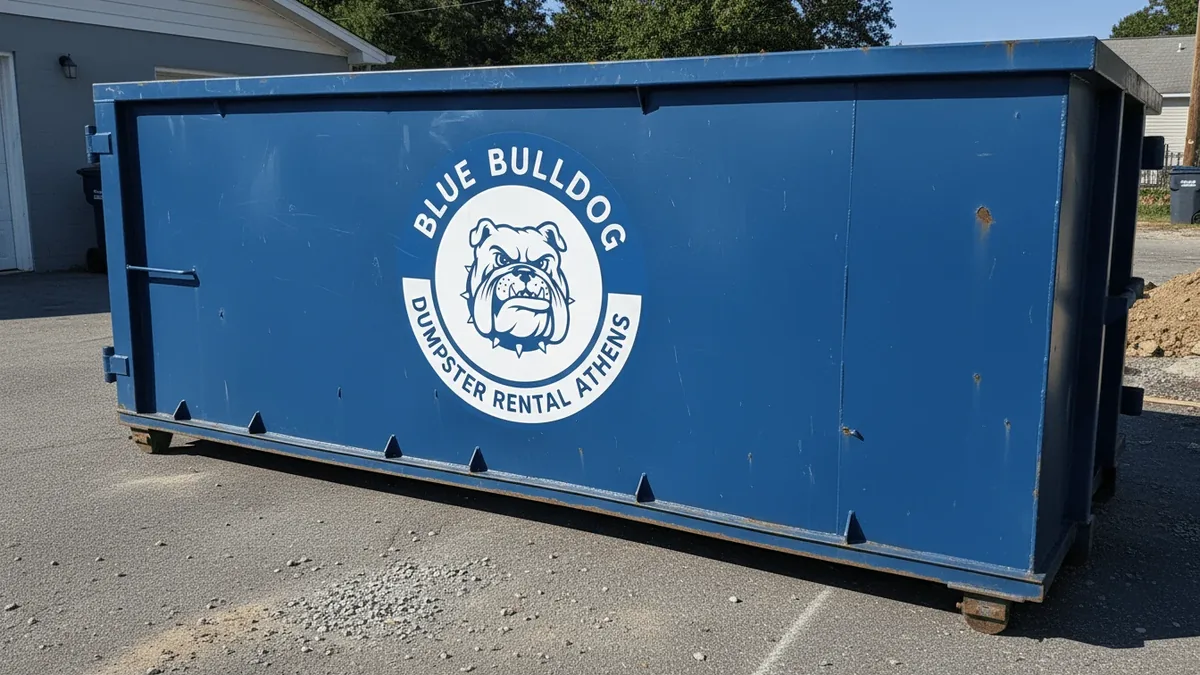
A loaded roll-off dumpster is heavy — a full 20 yard container with construction debris can weigh several tons, and all of that weight sits on a relatively small footprint at the container’s rails. On uneven or rocky ground, an unstable placement can mean a container that sits slightly tilted, doors that don’t swing or latch quite right, or — in the more serious case — a surface that gives under the load. A flat, stable spot matters more here than it might in an area with deeper, more uniform soil, simply because there’s more variability in what’s a few inches under any given patch of ground.
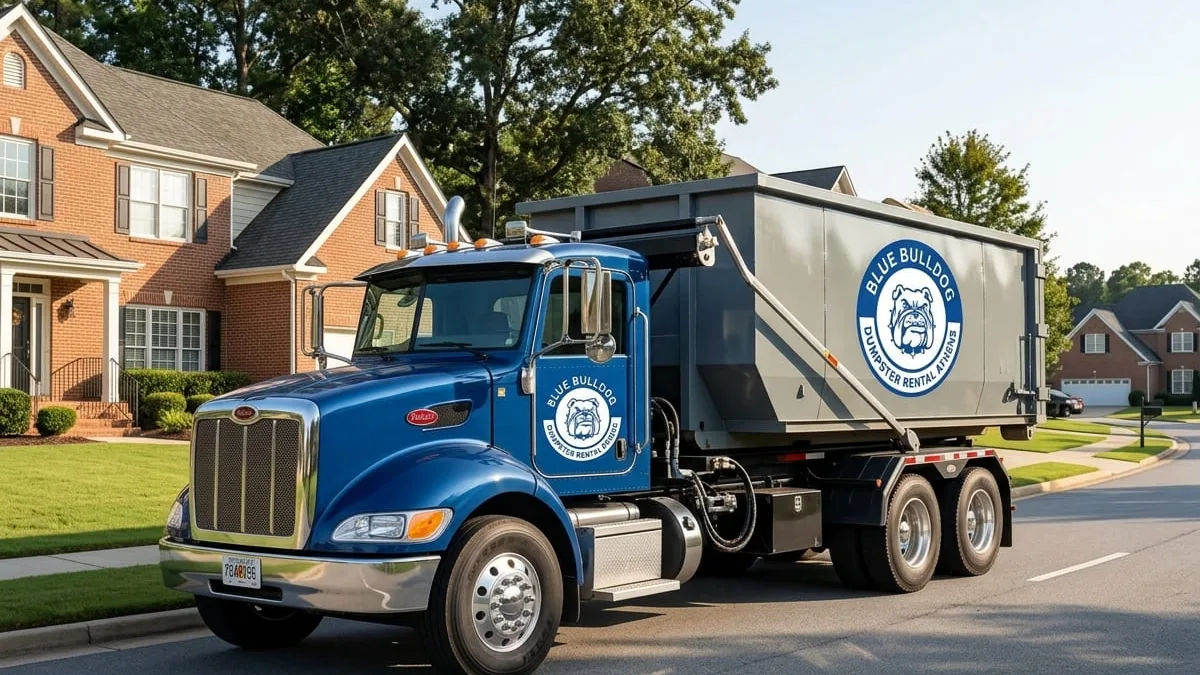
On residential deliveries, we place boards or plywood under the container’s rails as standard practice. This spreads the container’s weight across a wider area rather than concentrating it at a few contact points, which protects both the surface underneath and the stability of the container itself. On a paved driveway this mainly protects the concrete or asphalt from scarring; on gravel, dirt, or a less certain surface, it also helps keep the container level and reduces the chance of the rails sinking unevenly into softer or looser ground.
A few minutes on the phone up front saves a headache on delivery day. When you schedule, let us know about:
None of this usually changes whether we can deliver — it just changes exactly where we set the container and how much surface protection we bring. We’d much rather know ahead of time than find out when the truck is already on site.
It’s worth separating two different things that sometimes get lumped together. Shallow bedrock affecting a footer, a foundation, or a deep utility trench is a question for a contractor or excavator, and it’s a bigger undertaking than anything a dumpster placement involves — that kind of work sometimes needs specialized equipment to break through rock closer to the surface than a standard dig would expect. Dumpster placement is a much smaller-scale concern: we’re setting a container on top of the ground, not digging into it, so what matters to us is surface stability and levelness, not what’s several feet down. If your property has known excavation challenges from prior work, that’s useful context, but it doesn’t necessarily mean placement will be difficult.
When a driver arrives, they’re scanning for the same handful of things regardless of what we discussed on the phone: is the surface reasonably level, is there any visible cracking or soft spots, and is there a clear path to back the truck in without driving over anything that could be a problem. On most properties this takes a minute and the container goes down without any extra steps. On properties where the ground is clearly uneven or where a spot has settled, our drivers will adjust placement slightly or add extra board coverage rather than force a container onto a spot that isn’t stable — a few feet of difference in where it sits rarely matters for the job, but it matters for keeping the container level and secure for the whole rental period.
None of this is a reason to be concerned about your property — it’s simply a characteristic of the ground in this part of Alabama, and it’s something a locally based crew accounts for as a matter of routine. We’ve delivered containers across Athens and throughout Limestone County long enough to have a good sense of where ground conditions tend to vary, and we’d rather ask a couple of extra questions up front than deal with a placement issue after the fact.
If you’re planning a residential project and have any concerns about your driveway or yard, mention it when you call. Our residential dumpster rental service covers exactly this kind of delivery, and we’ll walk through placement with you before the truck ever leaves the yard. We’re based on Wilkinson Street in Athens, we know this county’s ground, and we’re open Monday through Saturday, 7:00 AM to 7:00 PM, closed Sunday. Call (256) 800-6590 to book or ask questions before you do.
FAQs
There is no documented sinkhole or karst hazard specific to Limestone County. What we’re describing is more general — the county sits in a limestone-rich part of the Highland Rim, and shallow bedrock or rocky soil shows up in spots, which is a normal ground characteristic, not a hazard.
We place boards or plywood under the container’s rails on residential deliveries specifically to spread the weight and reduce that risk. If you already know a section of your driveway or yard is uneven or has settled, tell us when you book so we can plan placement and extra board coverage.
Mention any low spots that hold water after rain, visibly uneven or cracked pavement, whether the placement spot is gravel or unpaved rather than a paved driveway, and any recent excavation or grading work. This helps us bring the right surface protection and choose the most stable spot.
In most cases, yes. We regularly place containers on gravel and unpaved areas across Limestone County — we just use additional board coverage under the rails to help keep the container level and protect the surface underneath.
Limestone County’s namesake bedrock sits closer to the surface in a lot of spots compared with areas with deeper, more uniform topsoil, which means there’s more variability in what a few inches of digging or a heavy load will encounter. It’s a routine local factor we plan around, not a red flag.
Ready when you are
Call and you will speak to someone local who knows the streets, the permit rules and which box actually fits your driveway. Flat rate quoted up front.
Keep reading
Curbside collection in Limestone County won't take furniture, appliances, yard waste, or construction debris — here's what that means and how recycling actually works locally.
From a single-room cleanout to a full renovation, here's how to match your project to the right dumpster size in Athens and Limestone County — and why weight matters as much as volume.
Size, rental period, weight, and what's in the load all factor into a dumpster rental quote — here's how each one works, and how Blue Bulldog's flat-rate pricing keeps it simple.