Do I Need a Permit for a Dumpster in Athens, Alabama?
Driveway placement is usually simple, but street placement means checking with the city first. Here's how permit requirements actually work across Athens and the surrounding counties.
Athens dumpster guide
A plain-language guide to what's accepted, what needs separate handling, and what's never allowed in a roll-off dumpster — plus what to do with electronics and asbestos.
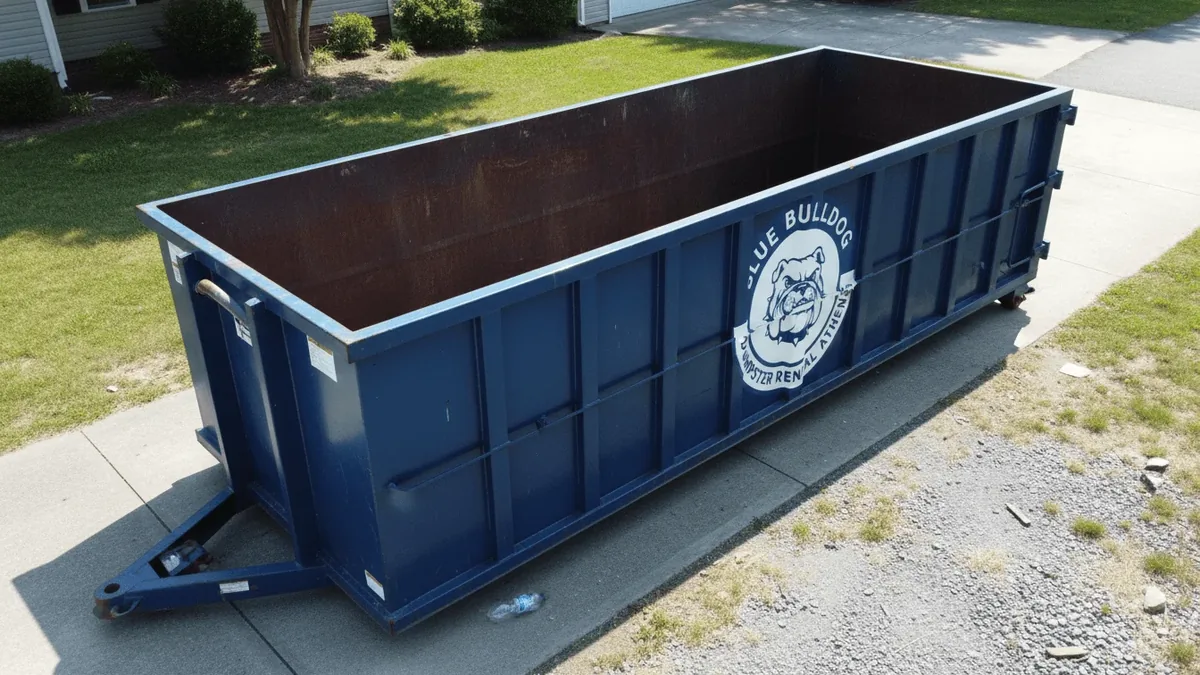
One of the first questions customers ask — usually right after “what size do I need” — is what's actually allowed in the dumpster. It's a fair question, because getting it wrong can mean an extra charge, a delayed pickup, or in a few cases, a real safety or legal problem. Here's a straightforward rundown of what's accepted, what's restricted, and what's never allowed in a roll-off rental in Alabama, along with why the line is drawn where it is.
Most of what fills a residential or job-site dumpster is straightforward. Standard household junk — old furniture, boxes, clothing, general clutter from a cleanout or move — goes in without any special handling. This is the bread and butter of our junk removal service and most residential dumpster rental bookings.
Construction and demolition debris is equally straightforward: drywall, wood framing, flooring (carpet, tile, laminate, hardwood), cabinetry, trim, and general building materials from a remodel or teardown are all accepted. This covers most of what comes out of a kitchen or bathroom renovation, and it's the core of our construction dumpster rental and demolition debris services.
Roofing material — shingles, underlayment, flashing, and the occasional bit of decking — is accepted, though it's dense enough that it's usually sized by weight rather than volume. Our roofing dumpster rental service is built specifically around that math.
Yard waste — branches, brush, leaves, sod, and general landscaping debris — is accepted as well, and it's worth knowing that Limestone County's curbside collection program explicitly does not take bulk yard waste, limbs, furniture, appliances, or construction debris. That gap is exactly what a roll-off from Blue Bulldog fills. See our yard waste dumpster service for details.
Clean wood, brick, and light-to-moderate concrete or masonry in reasonable quantities are also accepted, though because these materials are heavy, they're often best suited to a smaller container sized around the tonnage allowance rather than a large box you can't fill anyway. Our concrete and heavy debris page and our sizing guide both cover this in more detail.
A handful of items are restricted — not because they can never go in a dumpster, but because they require separate handling, disposal, or a heads-up before they get loaded:
Tires generally can't go in a standard roll-off load; they're handled through separate recycling channels. If your project involves tire disposal, ask us about it before you load the dumpster. Lead-acid batteries — car batteries, some equipment batteries — contain materials that require specific recycling handling and shouldn't go in with general debris; most auto parts stores accept these for recycling. Used motor oil and other automotive fluids need to go to a facility equipped to handle liquid waste, not into a roll-off. Household chemicals — pesticides, pool chemicals, solvents, and similar products — fall under hazardous waste handling and shouldn't be mixed into a general debris load. Paint, especially in any quantity, is restricted for the same reason; small amounts of fully dried, hardened latex paint are sometimes acceptable, but wet or liquid paint is not, and it's worth a quick call to confirm before it goes in the box.
None of these restrictions mean you're stuck — it just means a phone call to us or a trip to the right local drop-off point solves it faster than guessing. If you're not sure whether something on this list applies to your project, ask before you load it. It's a much easier conversation up front than after the container is already full.
Asbestos is the one firm line we don't move on. If your home was built before the 1980s and you're tearing out old flooring, popcorn ceiling texture, pipe insulation, or certain siding materials, there's a real chance asbestos is present. Asbestos-containing material cannot go into a standard roll-off dumpster under any circumstances — it requires testing and, if confirmed, removal by a licensed abatement contractor who handles it under the proper containment and disposal rules. If you have any reason to suspect asbestos in a demolition or renovation project, get it tested before work starts, not after debris is already sitting in our container. This isn't a matter of preference; it's a genuine health and legal issue, and it's the one thing we ask every customer to think through before a demo job begins.
Electronics — old TVs, computers, monitors, printers — are a gray area worth explaining clearly. Alabama does not have a specific statewide law banning electronics from the regular waste stream the way some states do. What Alabama has instead is a voluntary, state-supported framework: the Alabama Department of Environmental Management (ADEM) runs a statewide recycling program that funds and encourages local recycling infrastructure, but there's no blanket legal ban on putting a TV at the curb here. That said, we still recommend against putting electronics in a roll-off dumpster, for practical reasons — many contain materials that are genuinely better handled through a certified electronics recycler or a local e-waste collection event than sent to a landfill. If you've got a stack of old electronics as part of a cleanout, a certified recycler or a collection event in the Athens area is the better call, and ADEM's waste and recycling program pages are a good starting point if you want to understand the state's approach in more detail.
The short version: if it's household junk, furniture, general construction debris, roofing material, yard waste, or clean wood, brick, and concrete in reasonable amounts, it goes in without a second thought. If it's a tire, a battery, used oil, chemicals, or paint, it needs separate handling — ask us and we'll point you the right direction. If it's asbestos, stop and get it tested before anything else happens. And if you're just not sure, call us before you load it. We'd rather answer a quick question up front than deal with a load that has to be sorted or rejected at pickup — that costs everybody time and money that a thirty-second phone call would have saved.
FAQs
Yes. Furniture, boxes, clothing, and general household clutter are exactly what most residential rentals are used for, with no special handling required.
Yes, roofing material is accepted, though it's dense and heavy. We typically size a roofing dumpster by square footage and number of layers rather than by how big the roof looks, since weight is usually the limiting factor before volume is.
No. Alabama does not have a specific statewide landfill ban or take-back law for electronics. The state runs a voluntary, ADEM-supported recycling framework instead. We still recommend taking electronics to a certified recycler or a local e-waste collection event rather than putting them in a roll-off.
No, never. Asbestos requires testing and, if confirmed, removal by a licensed abatement contractor under proper containment and disposal procedures. It cannot go into a standard roll-off dumpster under any circumstances. If your home predates the 1980s and you're demoing flooring, ceiling texture, or old siding, get it tested before work begins.
These are restricted items that need separate handling rather than going in with general debris. Wet paint, household chemicals, used motor oil, and lead-acid batteries typically go to a dedicated drop-off point or recycler — call us before your project starts and we can point you toward the right option locally.
Ready when you are
Call and you will speak to someone local who knows the streets, the permit rules and which box actually fits your driveway. Flat rate quoted up front.
Keep reading
Driveway placement is usually simple, but street placement means checking with the city first. Here's how permit requirements actually work across Athens and the surrounding counties.
What actually counts as construction debris, why clean loads cost less than mixed ones, and how to size a dumpster for concrete, lumber, and drywall on an active jobsite.
A practical guide to sorting, timing, and sizing a dumpster for an estate cleanout in Athens, including why curbside pickup in Limestone County won't take furniture or appliances.