
Estate Cleanout Checklist for Athens, Alabama Families
A practical guide to sorting, timing, and sizing a dumpster for an estate cleanout in Athens, including why curbside pickup in Limestone County won't take furniture or appliances.
Athens dumpster guide
What actually counts as construction debris, why clean loads cost less than mixed ones, and how to size a dumpster for concrete, lumber, and drywall on an active jobsite.
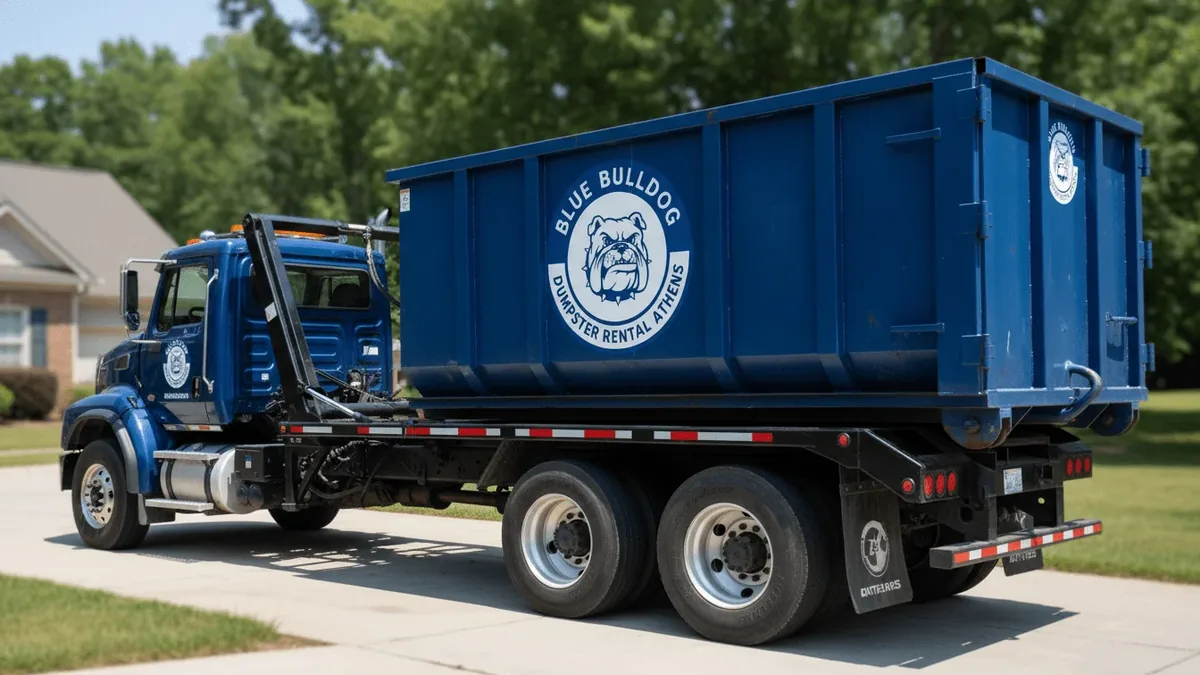
Construction and demolition debris is a different animal than household junk, and treating it that way — from the moment the dumpster lands on site — is what keeps a jobsite cleanup on budget. Below is how we think about it, from what actually qualifies as C&D debris to how to keep a load from turning into an expensive mixed load.
C&D debris covers the material that comes out of building, remodeling, and tearing down: lumber and framing scraps, drywall, roofing shingles, siding, flooring (tile, hardwood, vinyl, carpet with pad), concrete and masonry, plumbing and fixtures pulled during a remodel, and general demolition material from a partial or full teardown. It does not cover household trash, food waste, liquids, tires, batteries, or hazardous material like paint, solvents, asbestos, or fuel — those need separate handling and shouldn’t go in a roll-off with the rest of the job. If you’re not sure whether something on your jobsite qualifies, ask us before it goes in the box. It’s a much cheaper conversation before delivery than after.
A clean load is one material type, or a small number of compatible materials, with nothing that doesn’t belong — no household trash mixed with framing lumber, no paint cans tossed in with drywall scraps, no yard waste sharing space with concrete. A mixed or contaminated load is more expensive to process on the disposal end, and that cost gets passed back through the rental. The fix is simple but has to happen on site, not after the fact: keep a dedicated dumpster for demo and construction debris only, brief your crew (or your subs, if you’re a GC) on what goes in it, and don’t let it become the default spot for lunch trash and water bottles. A five-minute conversation with your crew on day one saves a lot of friction on pickup day.
This matters even more on multi-trade jobs, where drywall crews, framers, and demo crews are all using the same container at different points. Whoever is running the site should own keeping the load clean — it’s worth designating one person to keep an eye on it rather than assuming everyone will sort correctly on their own.
Every rental comes with a weight allowance based on container size, and for construction debris, weight — not volume — is usually what determines your actual cost. Concrete, brick, block, and tile are dense; a container that still looks half-empty can already be near its weight limit if it’s full of masonry. Drywall is heavier than it looks, especially when it’s wet or still has joint compound on it. Lumber varies a lot depending on whether it’s dry framing scrap or waterlogged material pulled from a rotted structure. If your project is heavy material specifically — a driveway or slab removal, a foundation demo, a load of broken block — it’s usually smarter to plan for a smaller container you can actually fill within the weight allowance, rather than a larger one you’ll never fill by volume before you hit the weight cap. Our concrete and heavy debris service is built specifically around that distinction, and it’s worth a call before you order if concrete or masonry is a big part of the job.
For general construction and remodel debris that isn’t dominated by concrete or masonry, most jobsite rentals land in the 20 to 40 yard range. A 20 yard handles a single-room gut, a bathroom or kitchen remodel, or a moderate demo scope. A 30 yard is where most whole-home renovations, new-build framing scrap, and mid-size demolition jobs land — it’s our most common recommendation for active construction sites. A 40 yard makes sense for larger teardowns, commercial fit-outs, or jobs generating a high volume of bulky, lighter material like framing lumber and drywall where weight isn’t the limiting factor. If your job includes both general debris and a separate concrete or masonry component, it’s often worth running two containers rather than trying to fit both into one — a lighter-debris box sized for volume, and a smaller heavy-debris box sized for weight. Full specs for each size are on our sizes page, and our construction dumpster rental page covers jobsite-specific delivery details.
For GCs, property managers, and repeat commercial customers, the logistics matter as much as the container size. We can provide a certificate of insurance (COI) ahead of delivery if your job site or property requires one — just let us know when you book so it’s ready before the truck shows up, not after. For active jobs generating debris faster than a single container can hold, we handle swap-outs: we pull the full container and drop an empty one on the same visit, so the site keeps moving without a gap in disposal capacity. If you’re managing a job with a tight schedule, tell us your expected pace up front — how many containers you expect to need and roughly how often — and we can plan the swap-out schedule around your timeline instead of reacting to it after the fact.
Load flat material (drywall sheets, flooring) first and stack it evenly rather than tossing pieces at random — it uses the container’s volume far more efficiently. Keep the load below the fill line marked on the container; an overfilled box can’t be legally hauled and means a return trip. Break down large pieces where it’s safe to do so — a folded section of siding takes up a fraction of the space of an intact sheet. And if your project timeline shifts, call us before the scheduled pickup rather than after — adjusting a swap-out date is easy when we know ahead of time.
Construction debris disposal comes down to matching the container to the material, not just the square footage of the job. Call us at (256) 800-6590 and describe the scope — what’s coming out, roughly how much, and whether concrete or masonry is part of it — and we’ll get you sized right the first time, with delivery scheduled around your actual start date.
FAQs
Household trash, liquids, tires, batteries, and hazardous material like paint, solvents, asbestos, or fuel don't belong in a construction debris dumpster. Lumber, drywall, roofing material, flooring, siding, and concrete or masonry are all fine — if you're unsure about a specific material, ask us before it goes in the box.
A mixed load — construction debris contaminated with household trash, paint cans, or yard waste — is more expensive to process on the disposal end, and that cost is passed back through the rental. Keeping a dedicated container for construction debris only, and briefing your crew on what goes in it, keeps the load clean and the cost predictable.
For dense material like concrete, brick, or block, weight hits the limit long before volume does, so a smaller container is often the right call even though it looks like it could hold more. Talk to us about the scope and we'll size it based on weight, not just how big the pile looks.
Yes. If your job site or property management company requires a COI before allowing delivery, let us know when you book so it's ready ahead of the scheduled drop-off.
Yes. For jobs generating debris faster than one container can hold, we pull the full container and drop an empty one on the same visit. Tell us your expected pace when you book and we can plan a swap-out schedule around your project timeline.
Ready when you are
Call and you will speak to someone local who knows the streets, the permit rules and which box actually fits your driveway. Flat rate quoted up front.
Keep reading
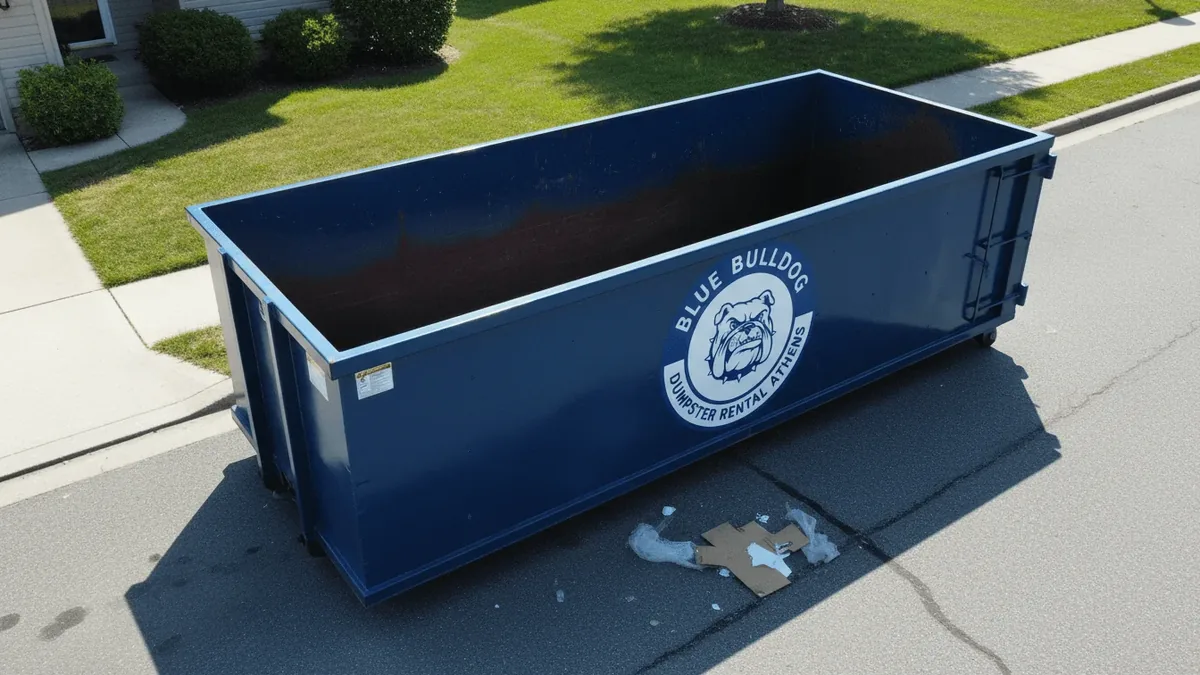
A practical guide to sorting, timing, and sizing a dumpster for an estate cleanout in Athens, including why curbside pickup in Limestone County won't take furniture or appliances.
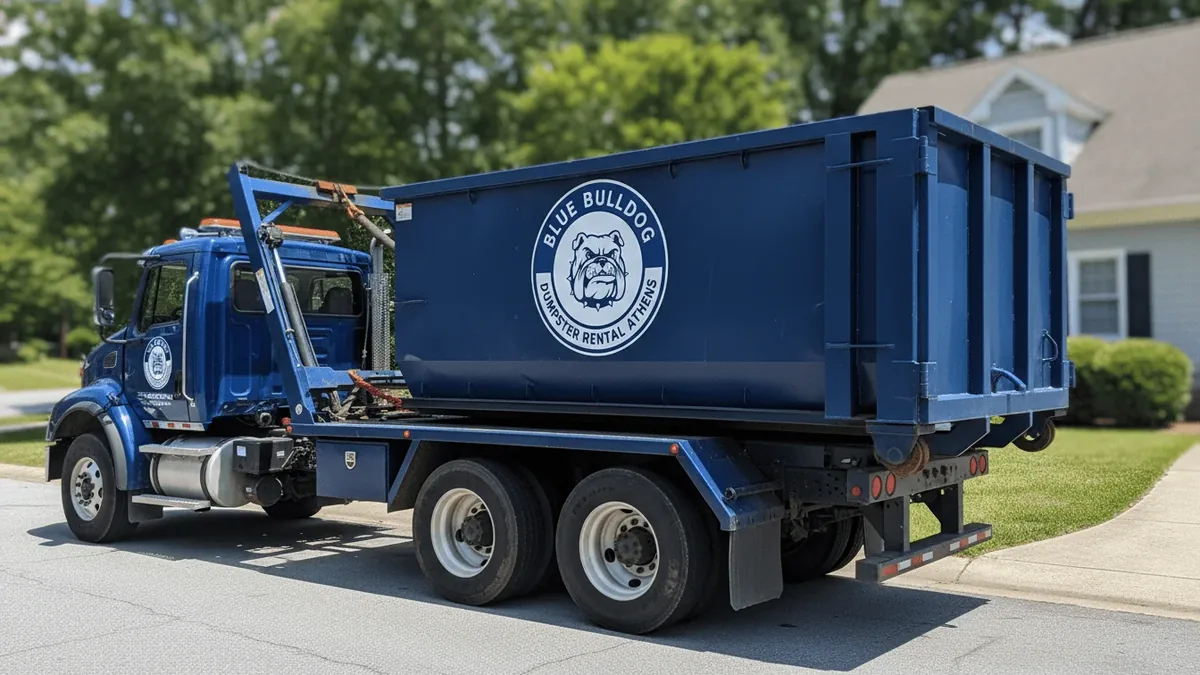
Shingles are heavier than they look, and weight limits, not roof size, usually decide the right dumpster. Here's how to size a tear-off dumpster by squares and layers.
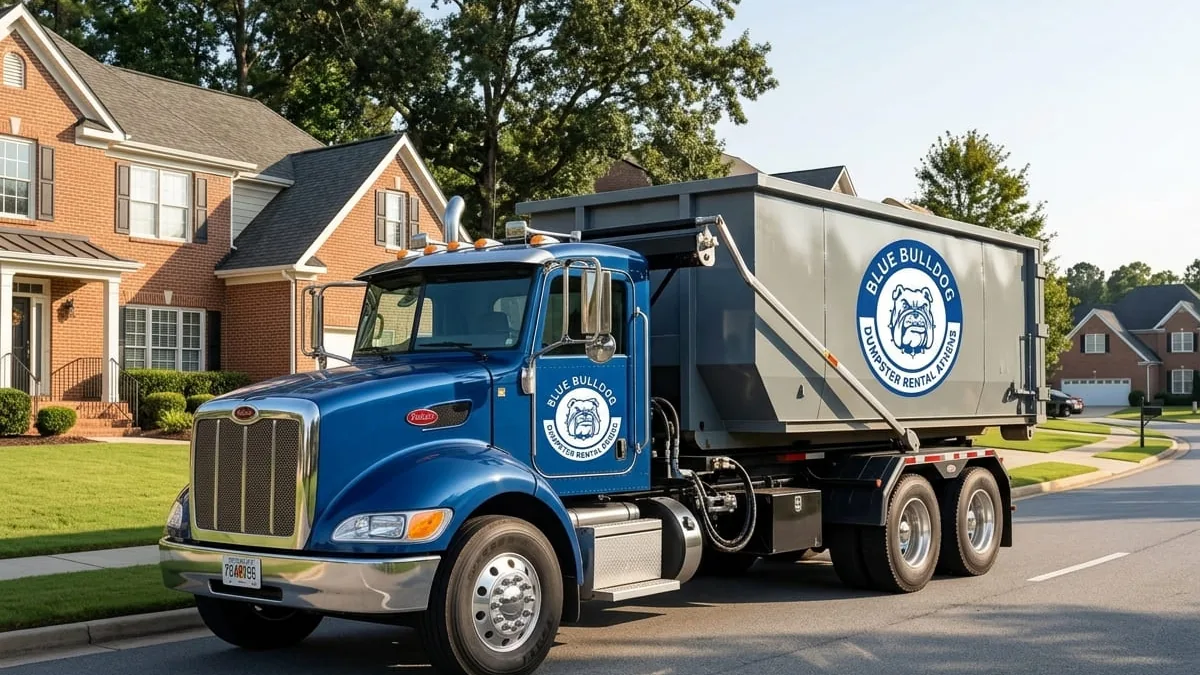
Limestone County has a real history with severe spring weather, and storm cleanup brings its own delivery and debris-weight considerations. Here's what to expect.